
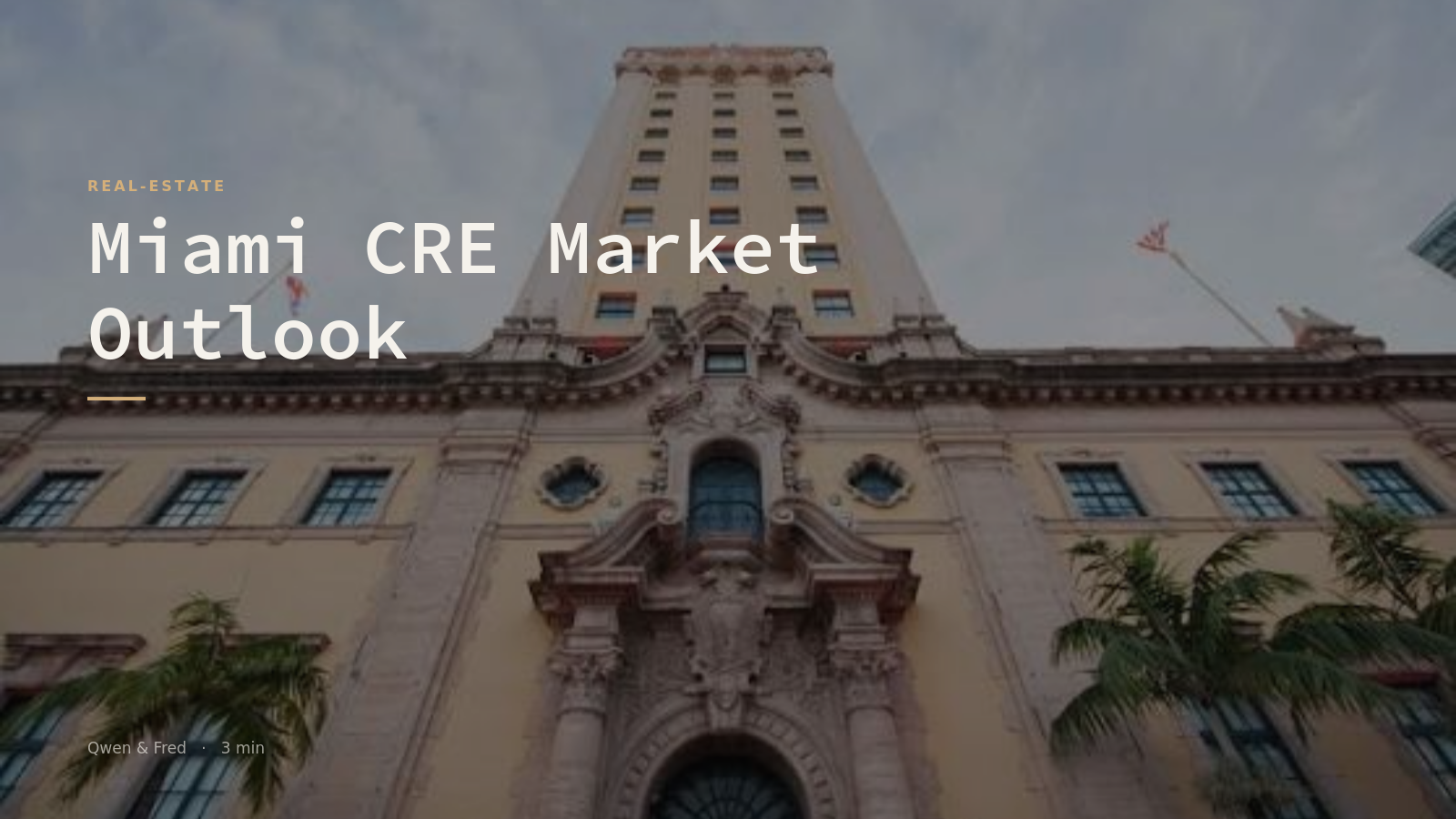
Alright, let’s dive into the Miami commercial real estate market as of June 2026 with a bit of a bar stool chat vibe. Picture this: you’re at a bustling Miami bar, and your buddy is regaling you with tales of the local real estate scene.
First off, Miami’s office leasing trends are heating up in Brickell, which is like the downtown area where all the big shots want to be seen. As of June 2026, demand for office space in this part of town is soaring. Companies are snapping up prime spots, much like how everyone wants that VIP table at a trendy Miami restaurant.
Now, let’s talk about property values. According to our data, commercial property values in Miami have been climbing steadily. Cap rates (the rate of return on an investment) are coming down, which means investors are willing to pay more for the same returns. It’s like when you find a great deal at the mall; everyone wants it because it’s a good value.
The South Florida market forecasts suggest that this trend will continue. If you’re looking to invest in Miami commercial property values, now might be an opportune time. However, keep an eye on those mortgage rates—they’ve been creeping up as of July 2026, reaching 6.55%. Higher borrowing costs can put a damper on the party, much like when your favorite bar starts charging for drinks.
Employment trends are looking good too. The unemployment rate (UNRATE) is down to 4.2% and continues its downward trajectory. This means more people have jobs, which translates into more spending power in the market. It’s like if everyone at a party had more cash to spend on drinks and food—there’s just more energy flowing around.
The Federal funds rate (FEDFUNDS) has been steady at 3.63% for June 2026. This rate influences how much it costs to borrow money, which in turn affects real estate investments. While the rate hasn’t changed, it’s still a factor that investors need to consider.
Putting all these signals together paints a picture of a Miami commercial real estate market that is robust but not without its challenges. The demand for office space and rising property values are strong indicators of growth. However, higher borrowing costs could temper some of the enthusiasm.
In summary, if you’re looking at making an investment in Miami’s commercial real estate, it’s a good time to be cautious yet optimistic. The employment numbers suggest stability, but keep an eye on those mortgage rates and cap rates. It’s like navigating a tricky game of poker—know your cards well, and you’ll have a better chance of winning the hand.
So, whether you’re a seasoned investor or just dipping your toes into the Miami real estate pool, stay informed and be prepared to adapt as conditions change. Cheers to that!